-
How did European and Indigenous experiences and knowledge inform their views of the other in the early colonial period, focusing on the sedentary Indigenous peoples and the Spaniards? How did these views influence each side's subsequent actions and reactions?
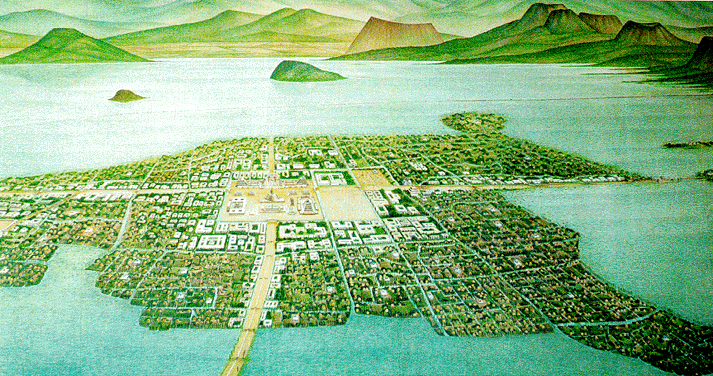
With the eventful, yet easy, conquest of the Caribbean, the European Spaniard’s view of the other (in this case, the sedentary peoples of Mesoamerica and the Andes) was shaped by previous interactions with the native peoples of the Caribbean and the Yucatan/Veracruz coast; the Spaniards viewed these peoples as a controllable population with a potential…
-
Sochi: A thriving, yet riddled (and bloody) spectacle
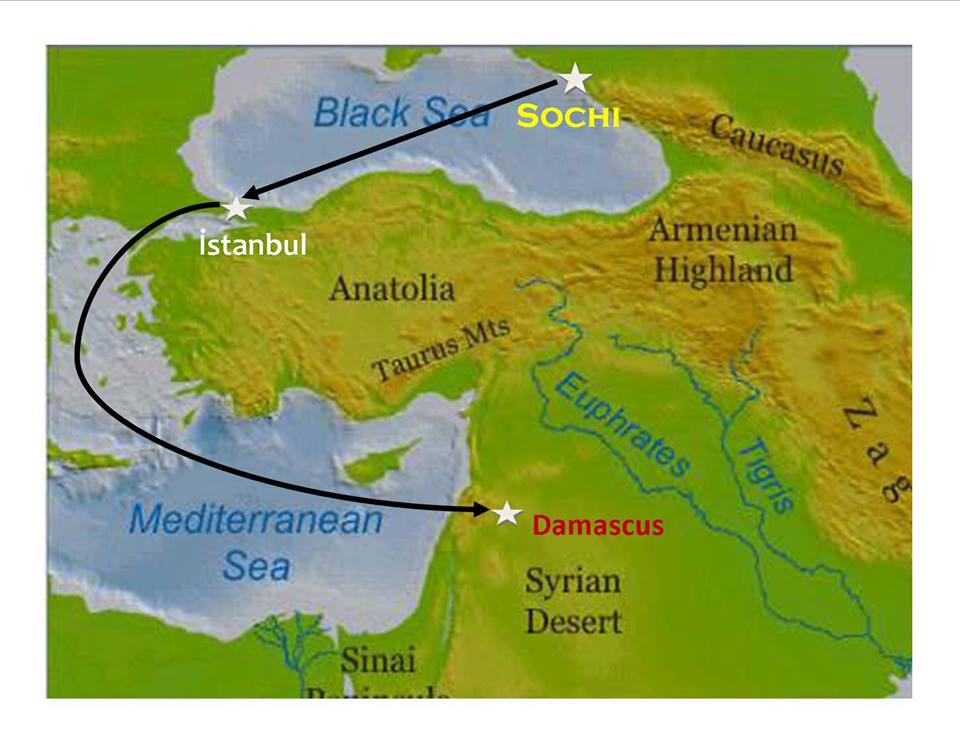
Sochi was home to the 2014 Winter Olympic Games. It’s also home to one of the bloodiest war scenes and chaotic events of diaspora in history. When it was announced that the 2014 Winter Olympics would take place on the fruitful and coastal city of Sochi, Russia, many were optimistic and looking forward to…
-
The Social Identities of California and The United Arab Emirates: How does the social history of California during the Gold Rush and Reconstruction eras relate today’s social patterns in The United Arab Emirates?
The UAE is in the middle of a modern-day gold rush. Despite the optimistic connotations behind any subject regarding a gold rush, the UAE, like nineteenth century California, is experiencing a social identity crisis. Unfree labor systems, similar to California’s unfree labor systems that rendered Chinese, African, and Native American statuses nearly as slaves, exist…
-
Technology World War I: Mainstream vs. Non-Mainstream and Public vs. Private

The internet is an arena of human aspirations. From CEOs and government authorities to amateur journalists and hackers, people of all walks of life in try to achieve their own goals while encountering obstacles posed by others in cyberspace. Two apparent battles, since the birth of the internet, highlight significant debates within our information society.…
-
Technological Multiplication: How Technology Halts Marginalization

Much of the world is aware that everyone is not computer literate. In fact, since the spawn of high speed wireless internet, laptop ubiquity, and rising demand for software skills in the professional world, information technology has actually increased socioeconomic inequalities. After all, not all computers can be utilized equally; individuals with more resources are…
-
Subscribe
Subscribed
Already have a WordPress.com account? Log in now.
 Jodutt Basrawi's Website