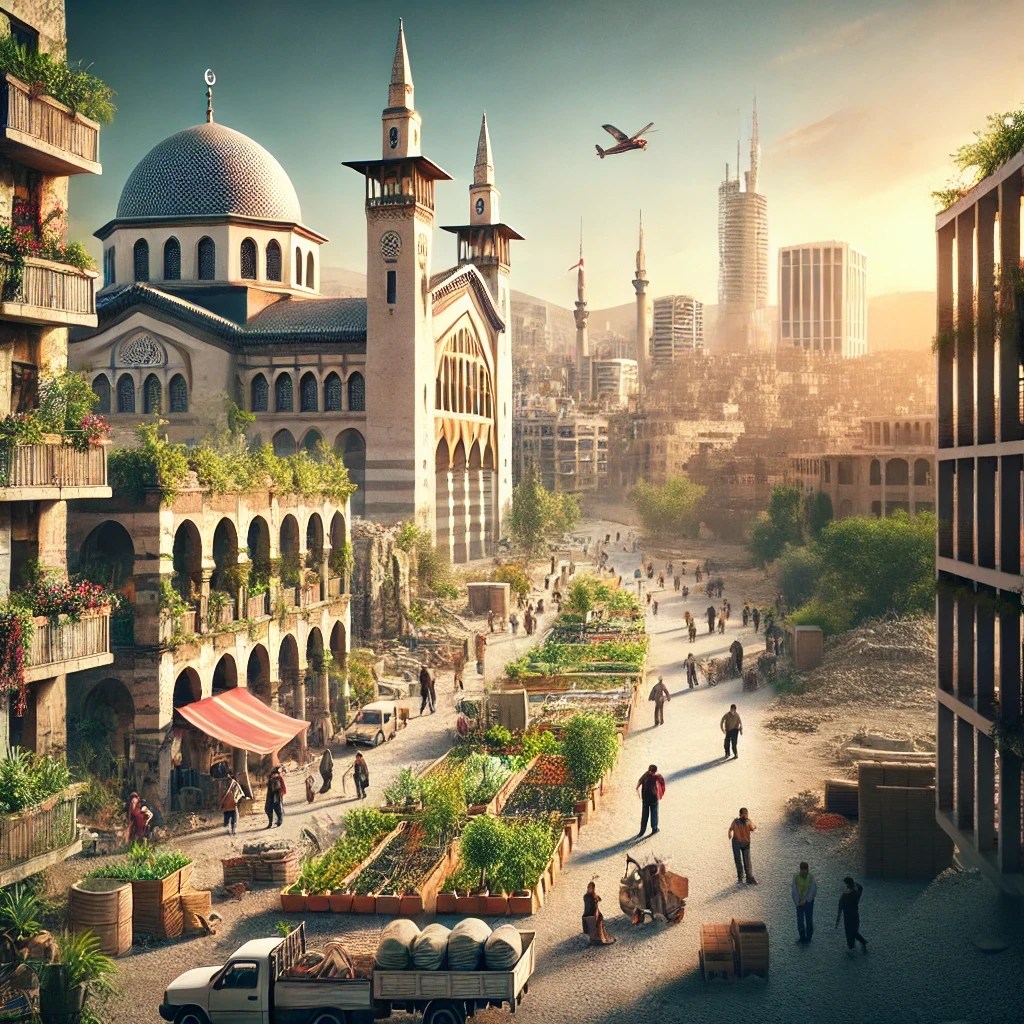
The world often feels weighed down by injustice, and for years, Syria was a glaring example of this. The brutality, the suffering, and the displacement of millions left the nation in shambles. Even now, after the fall of Assad, uncertainties linger about the path forward. The sheer scale of the rebuilding needed can make the task of rejuvenating Syria feel daunting.
In such times, it is tempting to retreat into cynicism, to point to the lack of clear alternatives as a justification for inaction. This mindset is a trap—the idea that without a perfect plan, it’s safer, even wiser, to do nothing. But such thinking only perpetuates suffering, allowing injustice and despair to deepen. Worse, it delays the opportunity to reach new potentials.
Clarity doesn’t always precede action. Often, the first step forward must be taken in uncertainty, driven not by guaranteed success but by a refusal to accept the status quo. The lack of clear solutions is not an excuse for allowing injustice to persist. Not if you value humanity.
I wish to see Damascus, not just to visit my childhood home, but to also help rebuild the city into a place of hope and possibility. It may not be easy. However, the absence of clear answers doesn’t absolve us of the responsibility to act. It is through small acts of courage, persistence, and hope that we can begin to repair what has been broken.
Syria’s future depends on those willing to move forward despite the unknowns. It depends on those who believe that justice and humanity are worth fighting for, even in the face of uncertainty. I hold onto that belief, and I hold onto the hope that one day, Damascus will become one of the most sought-after places to visit and live in.
From hereon, there are some useful concepts in rebuilding a city like Damascus.
- Clear rubble and debris from war-torn areas.
- Assess and repair critical infrastructure, including roads, bridges, and utilities.
- Restore water and sewage systems to ensure public health and sanitation.
- Rebuild power grids and introduce renewable energy sources.
- Secure funding from international donors, governments, and NGOs.
- Develop a master urban plan that integrates historic preservation and modern needs.
- Rehabilitate hospitals and clinics and stock them with supplies.
- Establish mental health support programs for trauma recovery.
- Reconstruct schools and universities, prioritizing equitable access to education.
- Provide housing for displaced residents, including affordable and temporary options.
- Create job opportunities to reduce unemployment and stimulate economic growth.
- Promote small businesses and entrepreneurship with microloans and support.
- Restore and preserve cultural landmarks, including mosques, churches, synagogues, and ancient sites.
- Replant green spaces and develop parks to enhance urban livability.
- Establish legal frameworks for property ownership, governance, and justice.
- Strengthen security and policing to maintain public safety.
- Engage local communities in decision-making processes to ensure inclusivity.
- Foster interfaith and intercultural dialogue to build harmony among diverse groups.
- Promote sustainable practices in urban development and waste management.
- Build technology and innovation hubs to attract investment and foster progress.
- Facilitate the return of displaced citizens and support reintegration.
- Train and employ local workers in reconstruction efforts.
- Strengthen public transportation systems to improve accessibility and mobility.
- Provide public health campaigns to combat disease and improve hygiene awareness.
- Monitor progress through data-driven metrics and transparent governance.
 Jodutt Basrawi's Website
One response to “Rebuilding Damascus: Hope And Uncertainty”
[…] Rebuilding Damascus: Hope And Uncertainty […]
LikeLike