There’s a scene in The Sopranos where Carmela’s ziti becomes a kind of currency—a dish so expected, so reliable, that it functions as both comfort and obligation. I think about this often when I open my parents’ fridge.
My family is Syrian, not Italian, but we share the same quiet genius: we cook foods designed to be eaten again.
Consider the manoush. Cheese manoush and zaatar manoush in batches are made in batches, pulling them hot from the oven, say, on a Friday morning. By Saturday afternoon, they’re room temperature, slightly chewier, and somehow more satisfying grabbed cold between errands. There is never enough.
The same logic applies to fatayer, those little spinach pies folded into triangles. Fresh, they’re delicious. But tucked into a lunchbox the next day or eaten standing at the kitchen counter at 10 p.m., they become something else—a small, reliable pleasure that asks nothing of you.
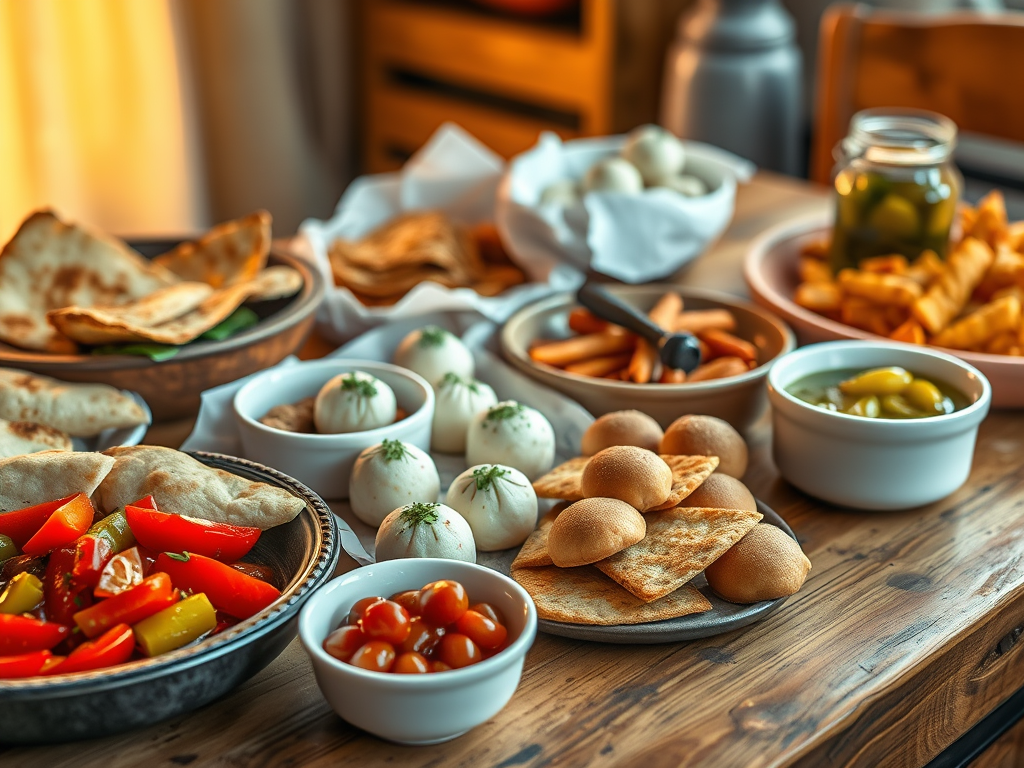
Then there are the foods that simply wait. Labneh balls suspended in olive oil. Pickles in their brine. Hummus in a covered bowl. These aren’t leftovers in the sad, reheated sense. They’re provisions. They sit patiently in the fridge or on the table, ready for any occasion: a rushed breakfast, an unexpected guest, a late-night craving you didn’t know you had.
This is the practical wisdom I’ve recently learned from my vacation with my family in Khobar, Saudi Arabia. It’s worth naming plainly. First, always cook more than you need. The effort of making twelve fatayer versus twenty is negligible, but the return on those extra eight is enormous. Second, stock your fridge with foods that require no preparation to serve. When a neighbor stops by or your daughter is suddenly hungry, you should be able to open the refrigerator and simply provide. Third, embrace the grab-and-go. A manoush wrapped in a paper towel is a complete breakfast. No pan, no plate, no problem.
Carmela Soprano understood this. So did her mother, and her mother’s mother. So does mine.
The genius isn’t in the recipes themselves—it’s in the foresight. It’s in knowing that hunger is recurring, that hospitality should be effortless, and that the best meals are often the ones you already made.
 Jodutt Basrawi's Website